MBTI and Self-Understanding: How Personality Types Support Self-Care and Growth
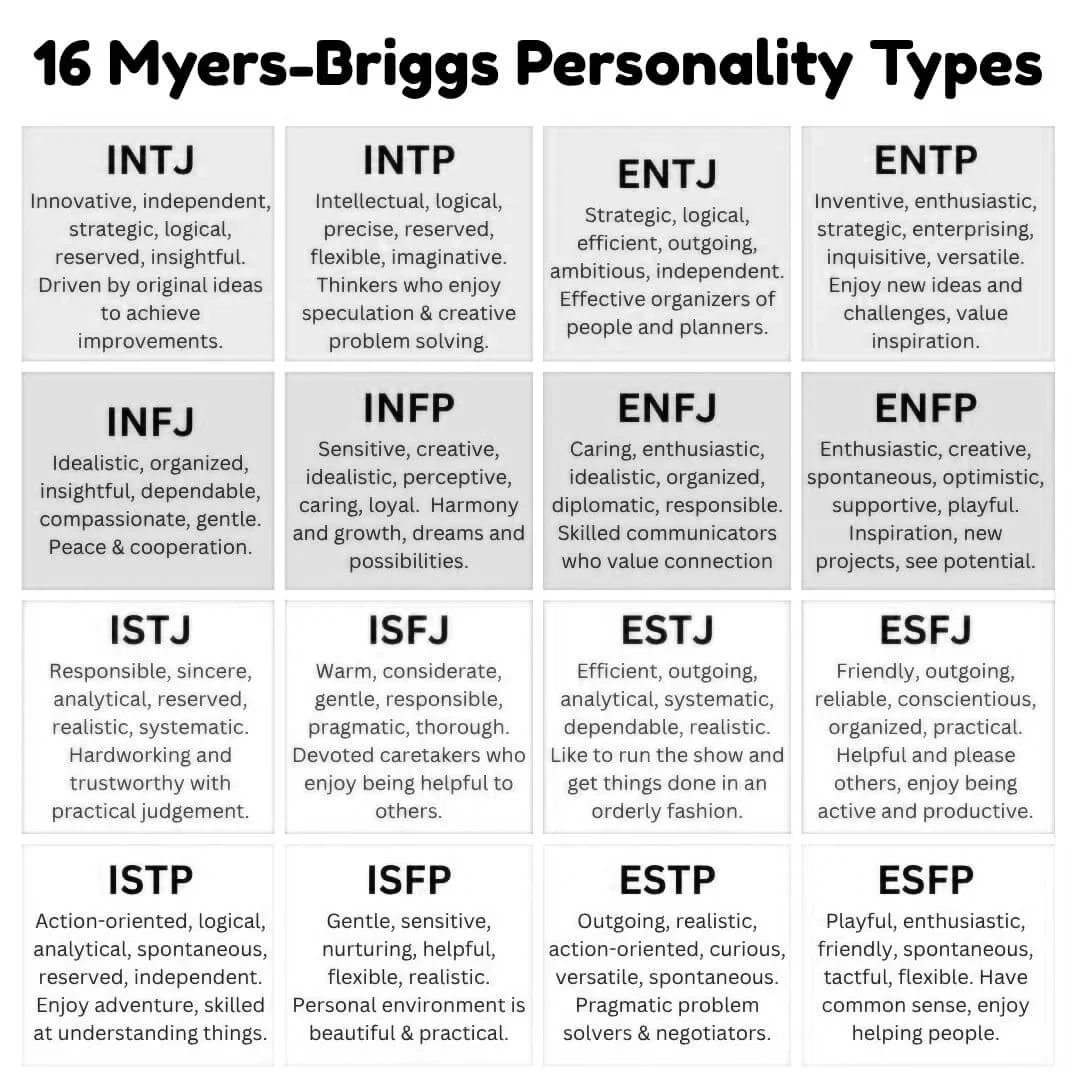
There is a reason MBTI has stayed popular for so long.
It is not because it perfectly defines who you are.
It is because it helps people finally put language to things they have felt their entire lives but never knew how to explain.
Things like:
“Why do I feel everything so deeply?”
“Why do I need so much alone time?”
“Why do I overthink relationships?”
“Why do I process life differently than other people?”
MBTI does not answer everything.
But it can give you a starting point for understanding yourself in a more compassionate way.
And that matters a lot in therapy, self-care, and personal growth.
First, What MBTI Actually Is (and Is Not)
MBTI, or Myers-Briggs Type Indicator, is a personality framework that sorts people into 16 personality types based on how they perceive the world and make decisions.
It looks at preferences like:
Introversion vs Extraversion
Intuition vs Sensing
Feeling vs Thinking
Judging vs Perceiving
But here is the important part.
MBTI is not:
A limitation
A fixed identity
It is a psychological framework designed to describe patterns in how people tend to think, feel, and behave.
Think of it as a mirror, not a box.
Why MBTI Helps People Understand Themselves
One of the biggest benefits of MBTI is that it gives people language for their internal world.
For many people, especially those in therapy, this is huge.
Instead of thinking:
“I am just weird” or “I do not function like other people”
They start thinking:
“This is how I naturally process things”
That shift reduces shame.
And when shame goes down, self-understanding goes up.
MBTI and Self-Awareness
Self-awareness is one of the most important foundations of emotional health.
MBTI can support this by helping you notice:
How you make decisions
How you respond to stress
How you process emotions
What drains you versus what restores you
How you communicate in relationships
For example:
An intuitive person may naturally think in patterns and possibilities
A sensing person may focus more on concrete details and present reality
A feeling type may prioritize emotional impact and harmony
A thinking type may prioritize logic and consistency
None of these are better or worse.
They are just different ways of experiencing the world.
MBTI in Self-Care: Learning What Actually Regulates You
Self-care is often oversimplified.
People are told things like:
“Just rest more” or “just take a bath” or “just journal”
But real self-care is personalized.
MBTI can help you understand what actually restores your nervous system.
For example:
An introverted type may need:
Alone time after social interaction
Quiet environments to recharge
Low stimulation to feel grounded
An extraverted type may need:
Social interaction to regulate mood
External engagement to feel energized
Movement and activity instead of isolation
A highly intuitive type may need:
Time to process thoughts internally
Space to reflect before decisions
Depth instead of constant stimulation
This is where MBTI becomes practical.
Not just interesting.
Useful.
MBTI in Therapy: Why It Matters
In therapy, MBTI can be a helpful tool for understanding patterns that show up in clients.
It helps answer questions like:
Why does this person overthink everything?
Why do they shut down under stress?
Why do they feel emotionally overwhelmed so quickly?
Why do they struggle with boundaries or people-pleasing?
When therapists understand a client’s personality tendencies, it becomes easier to tailor the approach.
For example:
Some clients need emotional exploration
Others need structure and tools
Some need slower pacing
Others benefit from direct behavioral strategies
Personality awareness helps therapy feel more individualized, not generic.
MBTI and Relationships
One of the biggest areas where MBTI becomes helpful is relationships.
People often assume relationship conflict means incompatibility.
But often, it is actually difference in processing styles.
For example:
One person may need space to think before responding
Another may need immediate emotional communication
One may focus on logic during conflict
Another may focus on emotional connection
Without awareness, this creates misunderstanding.
With awareness, it creates compassion.
Instead of:
“Why are you like this?”
It becomes:
“This is how you process. Let’s meet in the middle.”
The Real Power of MBTI
The real value of MBTI is not in labeling yourself.
It is in understanding yourself with less judgment.
When used well, it helps you:
Stop comparing yourself to others
Understand your emotional patterns
Improve relationships
Build better self-care habits
Communicate your needs more clearly
Bring awareness into therapy work
It creates language for things that used to feel confusing.
Final Thought
At its best, MBTI is not about putting yourself into a category.
It is about recognizing patterns in how you experience life so you can work with yourself instead of against yourself.
Because once you understand how you are wired, everything changes a little.
You stop asking:
“What is wrong with me?”
And start asking:
“What do I need to function better as myself?”
That is where self-awareness becomes self-growth.
And that is where therapy becomes more effective, not just insightful.
Work With Me
If you are someone who relates strongly to personality patterns, overthinking, emotional depth, or feeling like you process life differently than most people, therapy can be a space to finally make sense of that.
I work with clients through a personality-aware lens, meaning we do not ignore how you are wired. We use it to understand your emotional patterns, relationships, stress responses, and self-talk so you can stop fighting yourself and start working with yourself.
Working with me is about using personality insight as a tool for self-awareness, emotional regulation, and real-life change.
If you are interested in working together, reach out to schedule a consultation here.
Keywords: MBTI personality types, MBTI in therapy, Myers Briggs self understanding, personality types and self care, MBTI and mental health, INFJ ENFP self growth, personality psychology therapy, MBTI self awareness, using MBTI for growth, personality types explained
